Revolutionizing Foundation Design: Advances in Pile Foundations and Deep Excavations

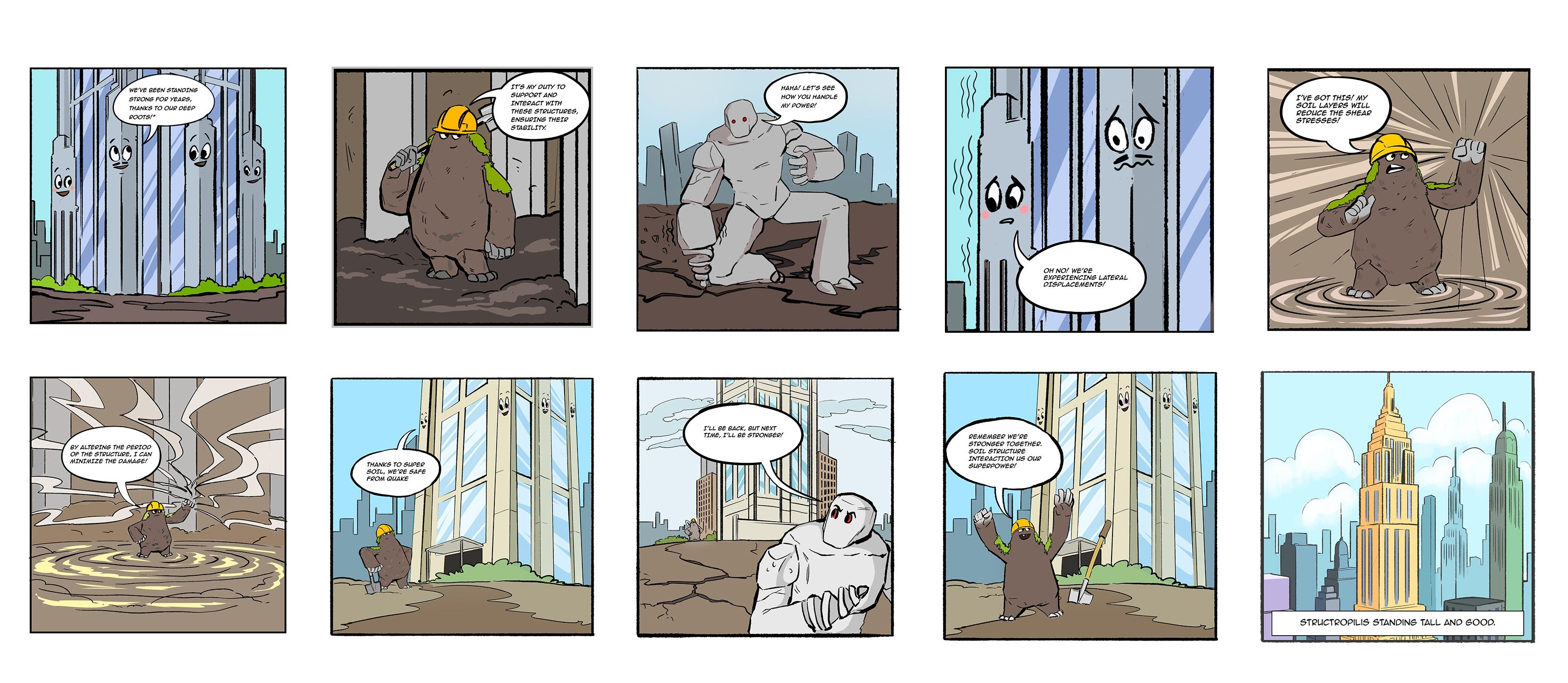
The foundation is a critical component of any structure, providing the essential support and stability required to ensure its longevity and safety. Traditionally, foundation design has relied on tried-and-true methods, but recent advances in pile foundations and deep excavations are revolutionizing the field.
Pile foundations, which transfer loads to deeper, more stable soil or rock, have seen significant improvements in design and installation methods. New materials and technologies, such as high-strength steel, advanced concrete, and innovative drilling techniques, enable deeper and more efficient pile installation. Additionally, improved analytical tools and numerical modeling allow for more accurate prediction of pile behavior, optimizing foundation performance and reducing construction risks.
Deep excavations, necessary for urban development and infrastructure projects, also benefit from cutting-edge techniques. Advanced shoring systems, such as diaphragm walls and secant piles, provide improved stability and safety during excavation. Furthermore, innovative ground improvement methods, like grouting and jet grouting, enable the stabilization of poor soil conditions, reducing the risk of settlement and structural damage.
These advances have far-reaching implications, enabling the construction of larger, more complex structures in challenging environments. They also offer improved sustainability, reduced construction times, and enhanced safety standards. As research and development continue, we can expect even more groundbreaking innovations in foundation design, shaping the future of the built environment.
One of the most significant benefits of these advances in pile foundations and deep excavations is the ability to build in areas previously thought to be unsuitable. For example, advances in pile foundations have enabled the construction of high-rise buildings in densely populated urban areas with poor soil conditions. Similarly, innovations in deep excavation have made it possible to build underground structures, such as subway tunnels and parking garages, in areas with challenging geology.
Another benefit is the reduction in environmental impact. Traditional foundation methods often require extensive excavation and soil removal, leading to soil erosion and habitat destruction. However, with advances in pile foundations and deep excavations, construction can be done with minimal disturbance to the surrounding environment.
Furthermore, these advances have improved safety standards in the construction industry. Deep excavations can be hazardous, but innovative shoring systems and ground improvement methods have significantly reduced the risk of collapse and injury.
In conclusion, the advances in pile foundations and deep excavations are revolutionizing foundation design, enabling the construction of larger, more complex structures in challenging environments while minimizing environmental impact and improving safety standards. As technology continues to evolve, we can expect even more innovative solutions to emerge, shaping the future of the built environment.
Thank you for reading!
I am glad to receive feedback or have a discussion through comments.
*All images are by the author and will require prior permission in order to re-use them.
The Civil Engineering Chronicles is written by Dr. Ankitha Prakash Arvan, a passionate Civil Engineer and a PhD holder in the area of Structural/Geotechnical Engineering, who firmly believes that the communication is the key to growth and prosperity of future engineers.